Why Does Commercial Bread Make You Sick?
The commercial dough-making process.
Brad
6/24/20262 min read
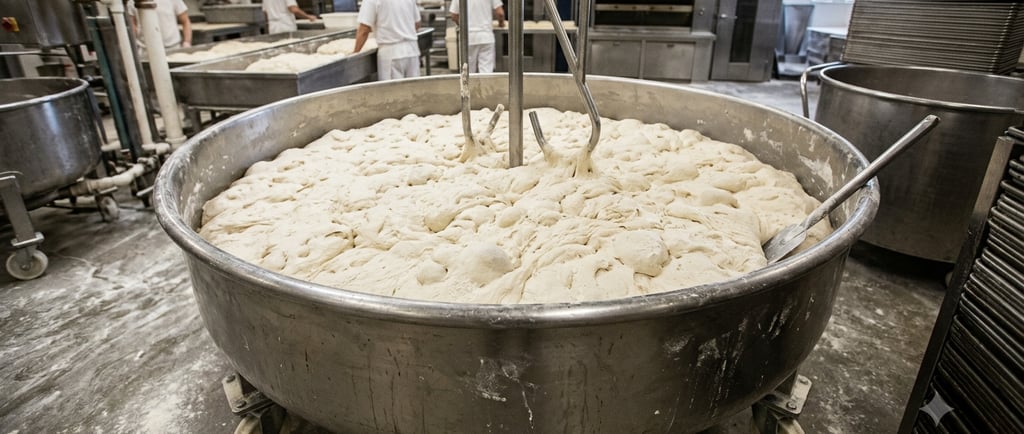
Commercial flour undergoes an intensive processing regimen designed specifically to extend its shelf life from a few weeks to over a year. Because commercial mills need flour to survive months in warm warehouses, shipping containers, and grocery store shelves without spoiling or attracting pests, they treat it using three main methods: nutrient extraction, chemical bleaching, and artificial preservation.
Here is exactly what goes into commercial flour to keep it shelf-stable:
1. Stripping the Living Elements (The Biggest Factors)
Before any chemicals are added, the primary way commercial mills extend shelf life is by physically removing the parts of the grain that spoil.
Germ Extraction: The germ contains volatile, highly nutritious natural oils (lipids) and Vitamin E. If left in the flour, these oils oxidize quickly when exposed to air, causing the flour to go rancid. Commercial milling strips the germ out entirely.
Bran Removal: The fiber-rich outer hull (the bran) is also removed in white flour because it contains trace enzymes and shields that can shorten shelf-life stability and disrupt gluten development in high-volume commercial baking.
By removing these, commercial white flour is essentially left as pure, inert starch (endosperm)—which has no fats left to spoil, but also has stripped away most of the grain's natural flavor and nutritional value.
2. Chemical Bleaching and Aging Agents
Naturally milled flour is a pale yellowish color and must naturally sit ("age") for several weeks to oxidize and whiten, which improves its baking performance. Because waiting weeks reduces profit margins and creates storage risks, commercial mills speed up this process using chemical gases and powders:
Benzoyl Peroxide or Chlorine Gas: These powerful oxidizing agents are bleached directly into the flour. They instantly whiten the yellow carotenoid pigments and destroy any natural bacteria or wild yeast spores present on the grain, sanitizing the flour for long-term storage.
Azodicarbonamide (ADA): A dough conditioner and aging agent added to accelerate flour maturation, giving it a longer warehouse shelf-life while ensuring it performs predictably in commercial mixers.
Potassium Bromate: Though being phased out by many bakers and banned in several countries, this aging agent is sometimes still used in the U.S. to chemically mature the flour instantly, strengthening the gluten structure so it doesn't degrade over months of sitting in a bag.
3. Preservatives and Anti-Caking Additives
To keep the flour flowing smoothly through commercial machinery and to prevent mold from forming if the bags encounter moisture during shipping, mills utilize a few subtle additives:
Calcium Propionate or Sodium Benzoate: Mild antimicrobial agents and mold inhibitors often added to standard commercial pre-mixes to prevent fungal growth.
Synthetic Vitamins (Enrichment): Because the natural nutrients were stripped away with the germ and bran, federal laws require mills to add synthetic versions back in. This includes thiamin, riboflavin, niacin, folic acid, and reduced iron. Because these vitamins are isolated and synthetic, they do not contain the volatile natural oils that cause fresh, stone-ground flour to spoil.
The Trade-Off
This processing creates a highly stable, uniform product that can sit in a pantry for 12 to 18 months without changing. However, it completely eliminates the sweet, complex, nutty flavor notes and the vibrant baking performance that only comes from raw, unbleached, freshly ground grains.